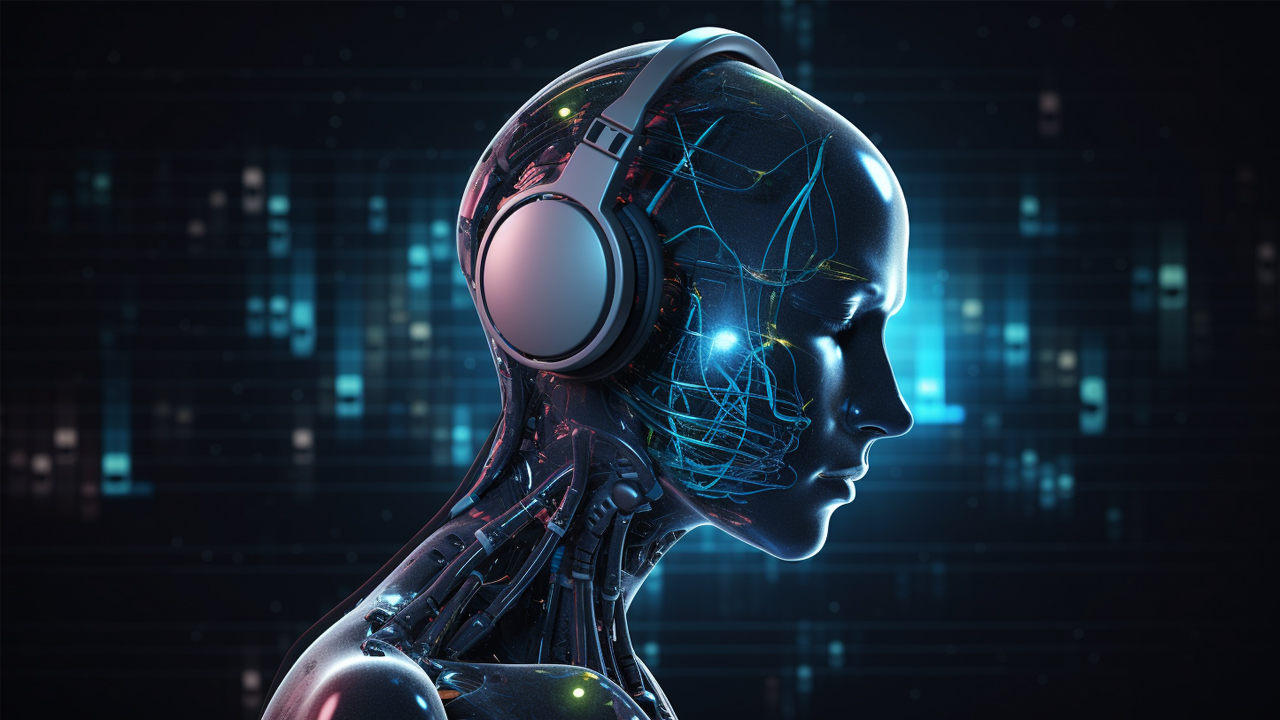
Introduction: The Day Creativity Lost Its Waiting Time
There’s a new kind of creative moment happening online, and it usually starts very innocently. Someone opens a tool “just to try it,” types something like “dreamy electronic track with nostalgic 90s visuals,” and a few minutes later they’re watching a fully formed music video that looks like it had a production budget… even though it didn’t.
No studio. No crew. No scheduling chaos. No “we’ll fix it in post.”
Just an idea → and a finished audiovisual product.
This is the reality of AI music video generators in 2026. Not futuristic fantasy, not experimental tech demos, but everyday creative behavior that feels almost too easy compared to how things used to be.
And that’s exactly the shift worth paying attention to: creativity is no longer slowed down by process. It’s only shaped by imagination.
The Old Way of Making Music Videos (Also Known as the “Why Was This So Hard?” Era)
Before AI entered the scene, making a music video was basically a group project where everyone had opinions, deadlines were optional, and budgets were emotionally stressful.
The workflow looked something like this:
write song → record track → find video concept → hire crew → shoot scenes → edit endlessly → revise again → argue about color grading → release months later → feel slightly disconnected from the original idea
It wasn’t just time-consuming. It was momentum-killing. By the time the video was finished, the original creative spark often felt like a memory from another version of yourself.
The biggest limitation wasn’t talent. It was friction.
And friction is exactly what AI systems are quietly removing.
Why AI Music Creation Took Over So Quickly
The rise of AI in music and video creation didn’t happen because people suddenly became more creative. It happened because the environment around creativity changed.
Three big forces pushed everything forward at once:
First, content never stops. Platforms now demand constant output. If you pause, you fade out of visibility.
Second, attention spans are brutally short. A great idea is useless if it doesn’t immediately look and feel complete.
Third, traditional production was simply too slow for modern creative cycles. Too many steps. Too many dependencies. Too many chances for motivation to disappear.
AI tools didn’t just improve efficiency—they removed entire categories of delay.
And when delay disappears, experimentation explodes.
From Idea to Sound: The New Role of AI in Music Creation
Before anything becomes a music video, it has to become music. This is where modern tools have completely changed the entry point of creativity.
An AI Song Generator allows users to turn simple text descriptions into fully structured songs without needing musical training or production software knowledge.
Instead of thinking in technical terms like chords or mixing, users think in emotional snapshots:
- “a reflective indie track that feels like walking alone in a rainy city at night”
- “energetic electronic music for a futuristic racing scene”
- “soft ambient soundscape with warm nostalgic energy”
The system interprets these descriptions and builds a complete track with rhythm, melody, structure, and mood consistency.
What’s interesting here is not just automation, but behavioral change. Users begin to refine taste through iteration. They generate multiple versions, compare emotional tones, and gradually understand what they actually want from music.
It becomes less about producing a song and more about exploring identity through sound.
When Sound Starts Asking for a Visual World
Music today rarely exists alone. In a world dominated by visual-first platforms, audio without visuals often feels incomplete.
That’s where AI-driven visual generation steps in.
Instead of manually editing footage or searching for stock clips, creators can now let systems interpret music directly as visual direction.
Beat structure influences motion.
Emotional tone influences color palettes.
Song progression influences scene transitions.
A calm intro might generate slow cinematic visuals. A rising section might introduce dynamic movement. A drop might trigger rapid visual transformation.
The result feels like the music is “thinking in visuals.”
This is where tools like the AI Music Video Generator become especially powerful—not because they automate video editing, but because they translate sound into visual storytelling logic.
The video doesn’t sit on top of the music. It grows out of it.
The Hidden Psychology Behind Why People Keep Generating “Just One More Version”
There’s a reason users often lose track of time with AI creative tools.
It’s not just speed. It’s the removal of consequence.
In traditional workflows, every iteration costs time and effort. That naturally limits experimentation. You think twice before making changes because every version takes work.
AI flips that structure completely.
Now iteration is instant. There’s no penalty for trying something weird. No cost for exploring alternatives. No pressure to commit too early.
The loop becomes:
generate → react → adjust → generate again → “okay wait, this version actually hits different” → repeat until time disappears
Creativity stops feeling like a task and starts feeling like exploration.
And exploration is addictive in a very different way than productivity.
Who Is Actually Using This Technology Right Now?
AI music video tools are no longer limited to experimental creators or tech enthusiasts. They’re quietly integrated into real workflows across multiple industries.
Independent musicians use them to quickly produce visual content without expensive production cycles. Social media creators rely on them to maintain consistent posting schedules without burnout. Marketing teams generate fast-turnaround campaign visuals that adapt to trends. Indie developers create cinematic previews before full game assets exist. Casual users experiment simply because it feels intuitive and entertaining.
Across all these groups, one pattern repeats: lowering friction leads to increasing output.
When creation becomes easy, people don’t just produce more—they explore more directions.
The Shift From Technical Skill to Creative Direction
For a long time, creative advantage belonged to those who mastered tools. Knowing software, workflows, and production techniques gave you control over output.
That hierarchy is changing.
In AI-assisted creation, the advantage is shifting toward iteration speed, emotional clarity, and decision-making. The person who can explore more variations and recognize stronger outcomes often produces better results than someone who spends days refining a single version.
This doesn’t remove skill—it redefines it.
Craft becomes less about execution and more about selection.
Creators are no longer just builders. They are editors of possibility.
Why This Feels Like a Bigger Shift Than Just “Better Tools”
It would be easy to treat AI music and video generation as another productivity upgrade. But the deeper change is structural.
Ideas are no longer filtered by effort. They are filtered by interest.
In the past, many ideas never survived past the “too much work” stage. Now they can be tested immediately. If they don’t work, they’re replaced instantly. If they do work, they evolve quickly.
This creates a cultural shift:
more experiments
more variations
more unfinished ideas that still get explored
more unexpected creative directions
Creativity becomes less about commitment and more about discovery.
Final Thoughts: Creativity Without the Delay Between Thought and Output
At the core of this transformation is a simple but powerful idea: creativity no longer has to wait.
The process is no longer a long pipeline. It’s a loop:
idea → generate → evaluate → refine → repeat
And inside that loop, something subtle changes. Creativity stops feeling like something you “do later” and starts feeling like something you can interact with instantly.
AI music and video generators don’t replace creativity. They remove the waiting period between imagination and reality.
And when that waiting period disappears, people tend to discover something surprising:
they didn’t need more time to create—they just needed less friction to start.